Cybersecurity as Strategic Security: How Investigative Platforms Must Evolve
Maltego Team
In February 2026, Munich once again became a focal point for global security dialogue. The Munich Cyber Security Conference and the Munich Security Conference brought together policymakers, security leaders, and technology experts to examine the rapidly evolving security landscape.
Across both conferences, one theme stood out: cybersecurity is no longer viewed solely as a technical or risk management challenge. It is increasingly treated as a matter of national resilience and strategic security.
For organizations building security and investigative technology, these conversations carry growing strategic importance. As a platform used by investigators worldwide, Maltego closely follows how global security priorities are evolving and what they mean for the future of open-source intelligence (OSINT), investigative workflows, and the tools analysts rely on to make sense of complex information environments.
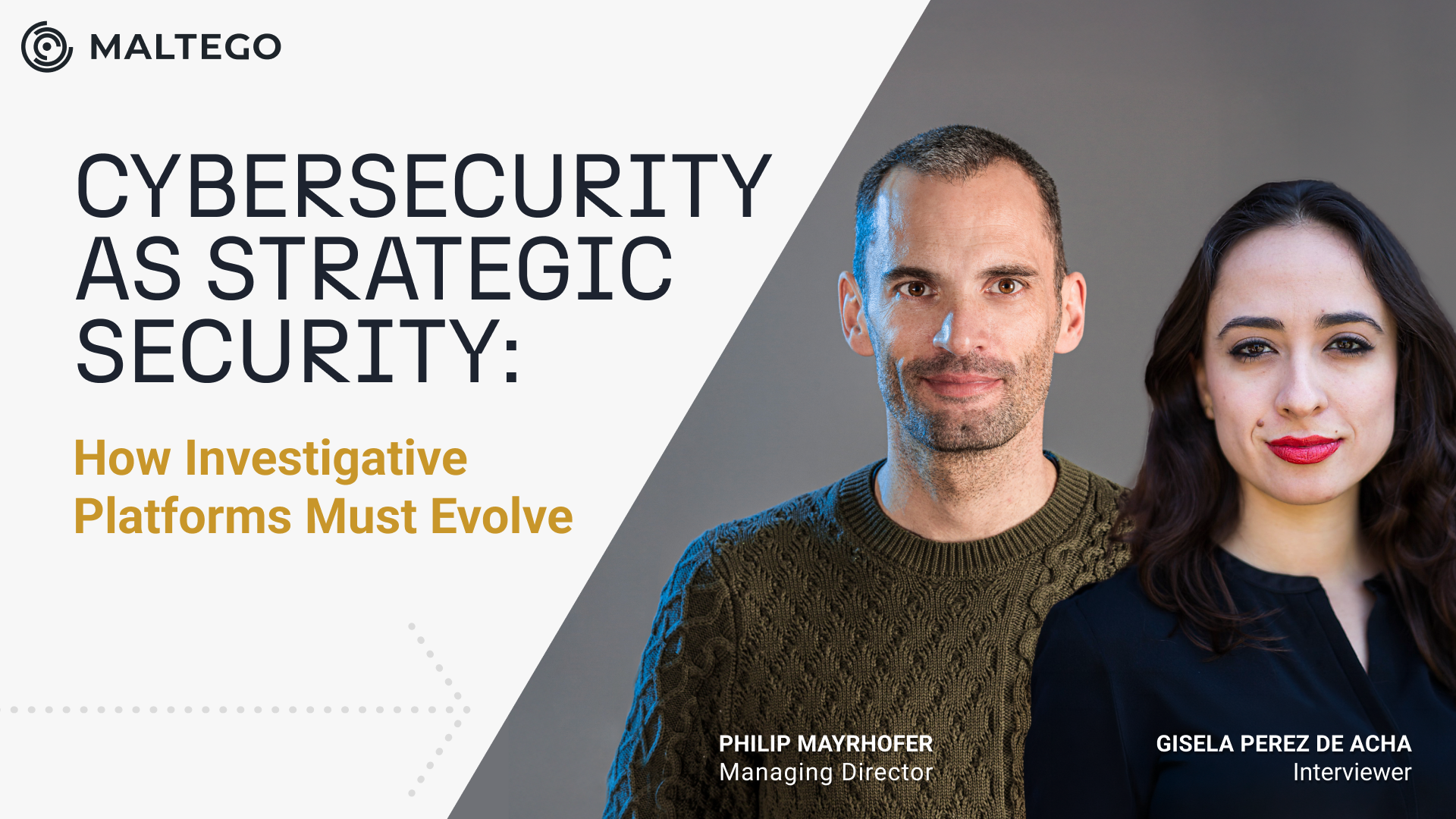
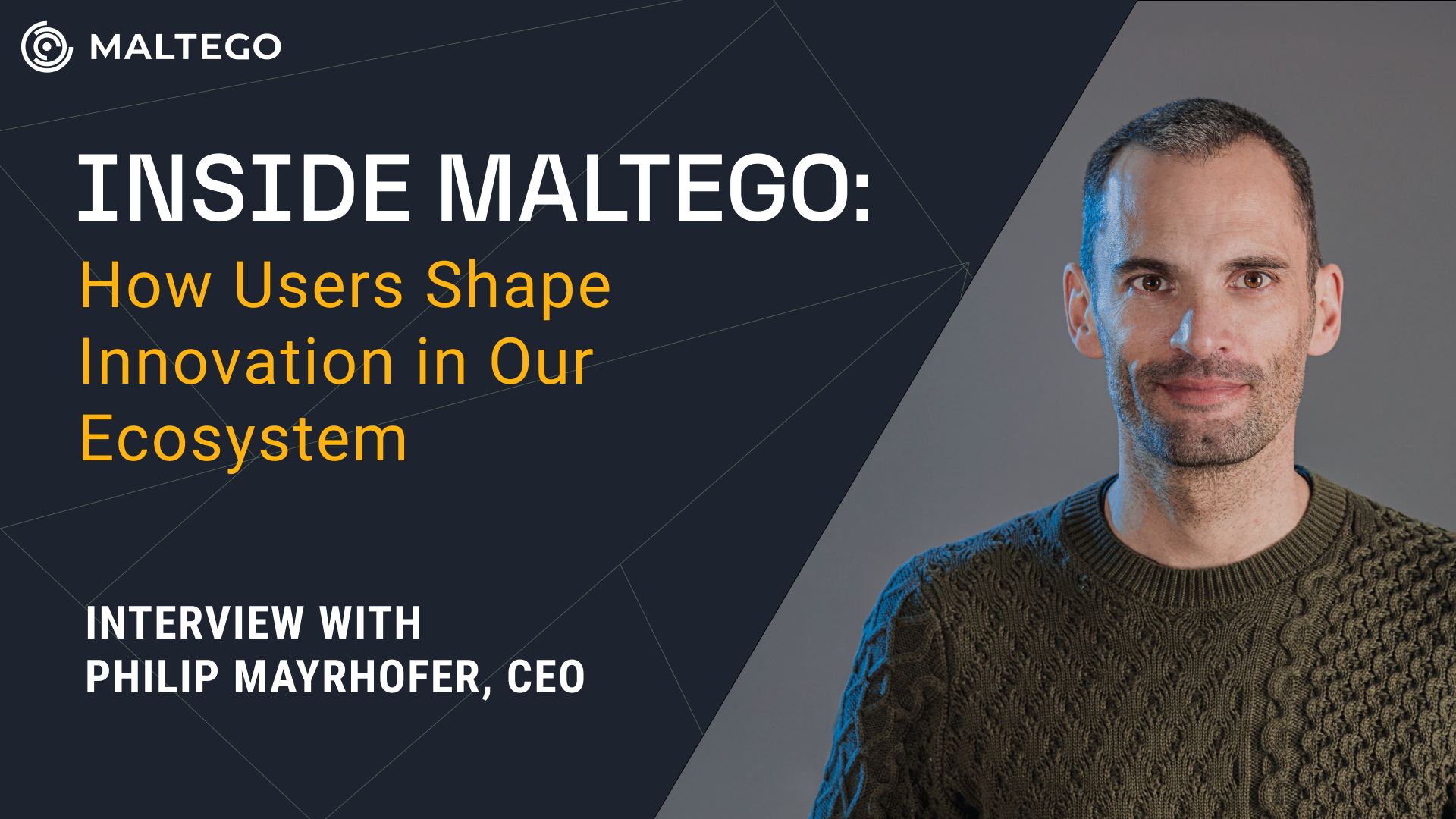
Following the conference, investigative OSINT reporter and professor Gisela Pérez de Acha, formerly with the UC Berkeley Human Rights Center, spoke with Maltego CEO Philip Mayrhofer to discuss his key takeaways from the event and his philosophy on designing and governing what is ahead for Maltego. If you’d rather read the script instead of watching the video, click here.
Since 2008, Maltego has supported mission-critical investigations worldwide, helping investigators across law enforcement, defense and military intelligence, government agencies, and the private sector turn complex data into actionable intelligence.
Over time, this mission has driven the continuous evolution of the platform. The launch of Maltego One in late 2025 reflects that direction, helping investigators focus on analysis and uncover the truth faster and with greater clarity in the browser through built-in data access, end-to-end encryption, guided workflows, and an AI Assistant.
These advancements have been made possible thanks to the Maltego community—researchers, journalists, investigators, and public institutions who use the platform and continuously push the boundaries of what investigative technology can do. We believe the future of investigations will continue to be driven by this collective effort. If you are part of the OSINT community, we invite you to join the conversation, share your expertise, and help advance investigative work.
New to Maltego? Try it for free and see why more than 200,000 investigators worldwide rely on Maltego for their investigations.
Philip: What drew me to Maltego was the product, the team, and the community. I love that the platform helps investigators make sense of complex information, and it is exciting to support people doing meaningful work. I also use Maltego myself to organize investigations and map out possibilities, so I understand its value firsthand.
Gisela: How did the key topics at the conference influence your thinking about building technology?
Philip: A major takeaway was the speed of change, especially with generative AI. It is creating both new threats and new opportunities, and that is accelerating everything. It feels like an arms race between threat actors and defenders, not only in cybersecurity, but also in misinformation and influence operations. Another important shift was how openly state actors were being called out, especially around attribution. There was also a stronger push for proactive rather than purely defensive security.
Gisela: How do you see the boundary between supporting journalists and investigators, and influencing public policy?
Philip: I do not see these groups as having very different goals. Whether it is governments, journalists, or researchers, the core objective is the same: to uncover the truth and separate fact from falsehood. The technology needed to do that is often the same. Our role is to help level the playing field so that democratic institutions, public bodies, and independent investigators have access to strong investigative tools.
Gisela: Where is the biggest disconnect between high-level geopolitical discussions and the daily work of investigators?
Philip: There is always political rhetoric at the top, but what reassured me was the strong willingness among researchers, investigators, and intelligence communities to keep collaborating. That practical cooperation matters a lot. At Maltego, we believe in supporting that collaboration through community, events, and the platform itself.
Gisela: Where does AI genuinely help investigations, and where does it create risk?
Philip: AI is already very useful for extracting information from unstructured sources like PDFs, media, and large volumes of content. It also helps with summarizing and analyzing information faster. Where we are heading next is recommendation systems that suggest what investigators should look at next. But AI must support the workflow, not replace judgment. The risk is overconfidence, noise, or losing sight of the evidence behind a conclusion.
Gisela: How do you handle attribution and transparency when AI is involved?
Philip: Source transparency is critical. In cases where AI helps analyze unstructured content, investigators still need to see where the outputs came from. In Maltego, this is especially important in the Graph, where data lineage shows how entities and connections were built. That traceability is a major priority because investigators need to verify, explain, and defend their findings.
Gisela: What decisions should remain human?
Philip: Final judgment must remain human, especially when it comes to attribution. In investigations, attribution can lead to serious consequences, so a human has to stay in the loop. We also draw clear red lines around areas like autonomous weapons and mass surveillance. AI can support the process, but not replace accountability.
Gisela: What does digital sovereignty mean to you?
Philip: To me, digital sovereignty is about transparency and control. It means knowing what the software is doing, having control over your data and results, and deciding where the infrastructure and investigative work are hosted and operated. Security and interoperability are also key parts of that.
Gisela: What kind of investigations did you do before Maltego, and how does that shape your work now?
Philip: I come from a research background and did a PhD in economics, which involved a lot of data analysis. That experience gave me a strong appreciation for how hard it is to work through large, messy datasets and how important good tools are for helping researchers stay focused and effective.
Gisela: Does digital fragmentation undermine investigative effectiveness?
Philip: Yes, but that has always been part of the challenge. Investigators rarely get neatly packaged information. The real challenge is defining the haystack before finding the needle. What has changed now is the scale and speed of information. AI is making that volume even larger, which means investigators need better tools to handle it.
Gisela: What strategic qualities will define cybersecurity companies that last?
Philip: The biggest differentiator will be trust. Access to AI is becoming easier for everyone, so the technology itself is not enough. What matters is whether a company can deliver reliable outcomes, work responsibly with experts, and build tools people trust. Human connection also matters. Strong communities, real collaboration, and openness will become even more important.
Gisela: What makes a platform truly support investigations instead of just aggregating data?
Philip: A meaningful platform helps patterns emerge. It allows investigators to see connections, outliers, and insights that matter. It also supports precise pivots rather than overwhelming users with endless data. At the same time, it needs to stay open and extensible so the community can build on it. Going forward, platforms also need to work well with AI agents, while keeping human judgment at the center.
Gisela: What advice would you give OSINT researchers today?
Philip: Stay curious and keep using strong judgment. Those are the qualities that will continue to matter most. At the same time, stay open to new tools and new ways of working, because the field is changing quickly.