Built at the 2026 Maltego Hackathon in Munich on October 20 and presented by the winning team the following day at Maltego M3C.
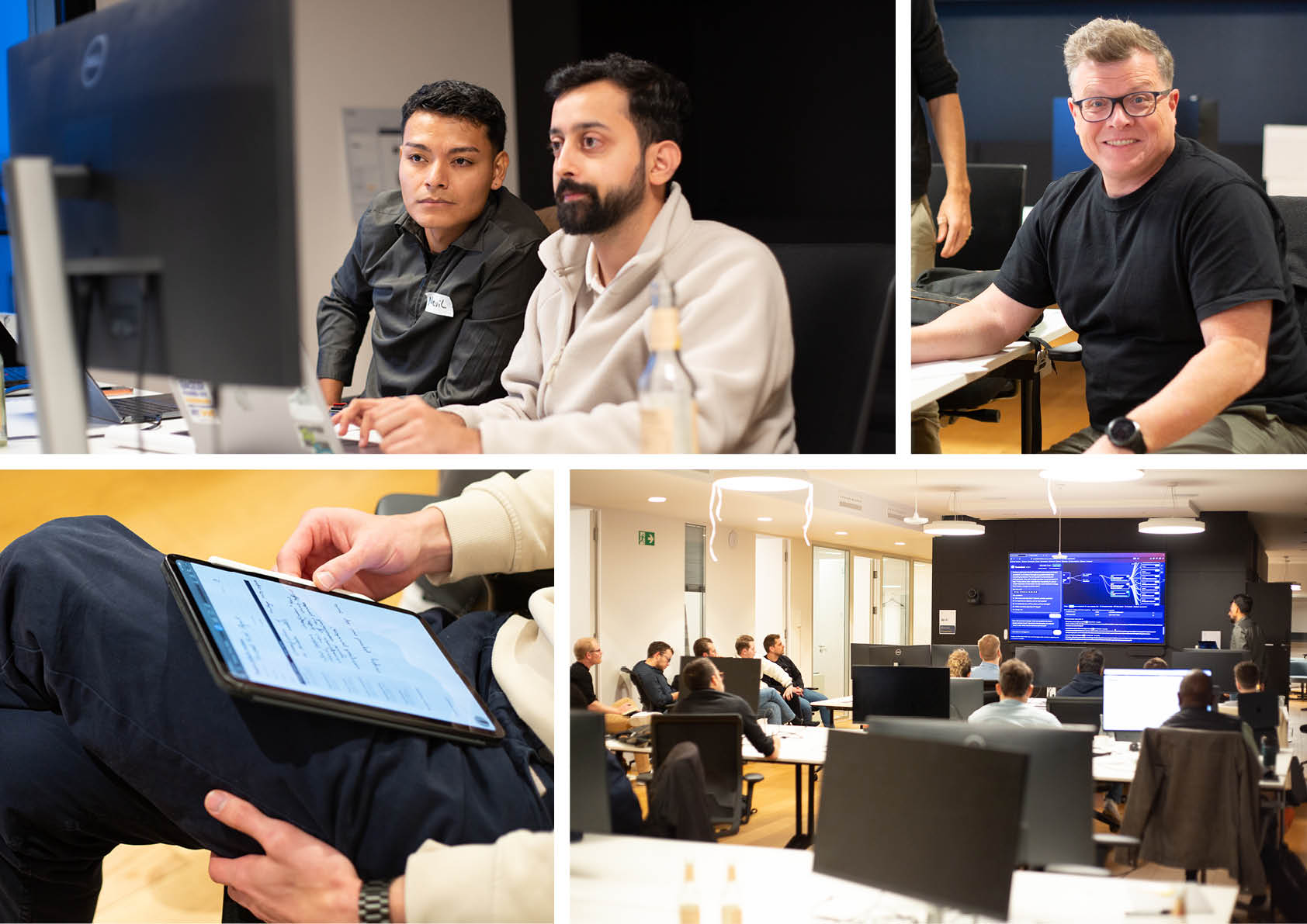
On October 20, Maltego and CDTM brought together developers interested in AI agents and large language models (LLMs) alongside investigators for a one-day hackathon at Maltego’s Munich headquarters. The event explored one question: What happens when you give AI agents access to the data used in real intelligence investigations?
Participants got early access to Maltego’s agentic platform, investigative tools, and the same data used by defence, intelligence, and law enforcement professionals. Their challenge was to build AI agents that could help investigators work faster in high-stakes cases. Maltego engineers worked with each team on setup and integration, while investigators shared what matters when working a case. The jury included Marcel Gordon, Maltego’s CPTO, and a representative from the Palladion Defence Accelerator at Bundeswehr University Munich.
In this article, we take a closer look at IntOS, the winning project.


The Problem: Investigators Don’t Lack Data, They Lack A Way to Know How Much to Believe it 🔗︎
The IntOS team focused on a challenge investigators face even when they have plenty of data: deciding how much confidence to place in a finding before acting on it. An AI agent can run Transforms and return a confident answer that makes the evidence seem stronger than it is. For example, forty articles citing the same vendor report can look like forty independent confirmations, even though they all trace back to a single source.
To make that distinction visible, the team explored using the Admiralty Code, an established framework that assesses the reliability of a source and the credibility of its claims separately.
What the Team Built 🔗︎
Aditya Natarj, a product manager at Maltego, and his teammate, Nevil Yepez, built IntOS, an AI investigation agent powered by Maltego DataMCP. When you ask IntOS a question in plain English, it follows four steps.
- Identifies a starting point. This could be an email address, IP address, company, or threat actor.
- Formulates hypotheses. It treats competing explanations as distinct hypotheses to investigate.
- Proposes an investigation plan. You review and approve the plan before any Transforms run.
- Runs Maltego Transforms. Once you approve the plan, IntOS selects and runs the relevant Maltego Transforms to follow up on leads.
Two Grades for Every Finding 🔗︎
IntOS uses the Admiralty Code to grade two things separately for each finding: how reliable the source is and how credible the claim is.:
- A to F rates how reliable the source is.
- 1 to 6 rates how credible the claim is. A 1 means independent sources confirm it.
A B3, for example, is a usually reliable source reporting something nobody else has confirmed yet.
IntOS suggests the inputs for each grade. Fixed rules assign the letter for source reliability and the number for claim credibility, and IntOS logs which rule it applied. Multiple articles repeating the same report count as a single source.
In a single day, the team built an agent that does more than surface findings. It helps investigators judge how far they can trust them. That’s the potential I see for Maltego. AI, automation, and MCP can do much of the work behind the scenes, giving investigators a clearer basis for deciding what the evidence supports and which lead to follow next.
In Practice: Three Real Investigations 🔗︎
The team tested IntOS on three real investigative questions. In each case, the grade reflected how strongly the evidence supported the claim.
- Email attribution (A1, Confirmed). Three separate breach records linked the email address to the same person. IntOS recorded the Transform, run ID, timestamp, and raw data fields for each step so investigators could trace the result back to the evidence.
- Scattered Spider attribution (B5, Improbable). A Reddit post claimed that Scattered Spider was targeting the UK. IntOS traced the claim to the 2025 Legal Aid Agency breach. Two independent sources contradicted the attribution, so IntOS revised its assessment to B5.
- Lazarus attribution for IP 45.148.10.80 (B3, Possible). IntOS graded the evidence that the IP address was malicious as 1. The link to Lazarus received a separate grade. One threat intelligence feed attributed the IP to the group, so without independent corroboration, the attribution remained possible at B3.
Key Takeaways 🔗︎
- Calibrated uncertainty beats confident answers. Saying “possibly” plainly is more useful to an analyst than a guess.
- Let the model suggest and rules decide. Deterministic grading makes every result explainable. Click any grade to see the rule that fired and the evidence behind it.
- Treat web content as hostile. VERITAS scans web text for hidden instructions. A source caught steering the agent is capped at the lowest reliability.
- Be honest about the limits. Starting scores are defaults, not yet calibrated values. Some judgments remain the agent’s call, but always visibly. Cost matters too: cheap checks run first, and some single lookups cost 200 credits.
Building with Maltego MCP showed us how investigators could decide where AI fits into their work. They can choose which steps to delegate, review the evidence behind each finding, and decide which leads to follow. The team is excited to develop IntOS further so our customers can use it to save time in their day-to-day investigations.
What’s Next 🔗︎
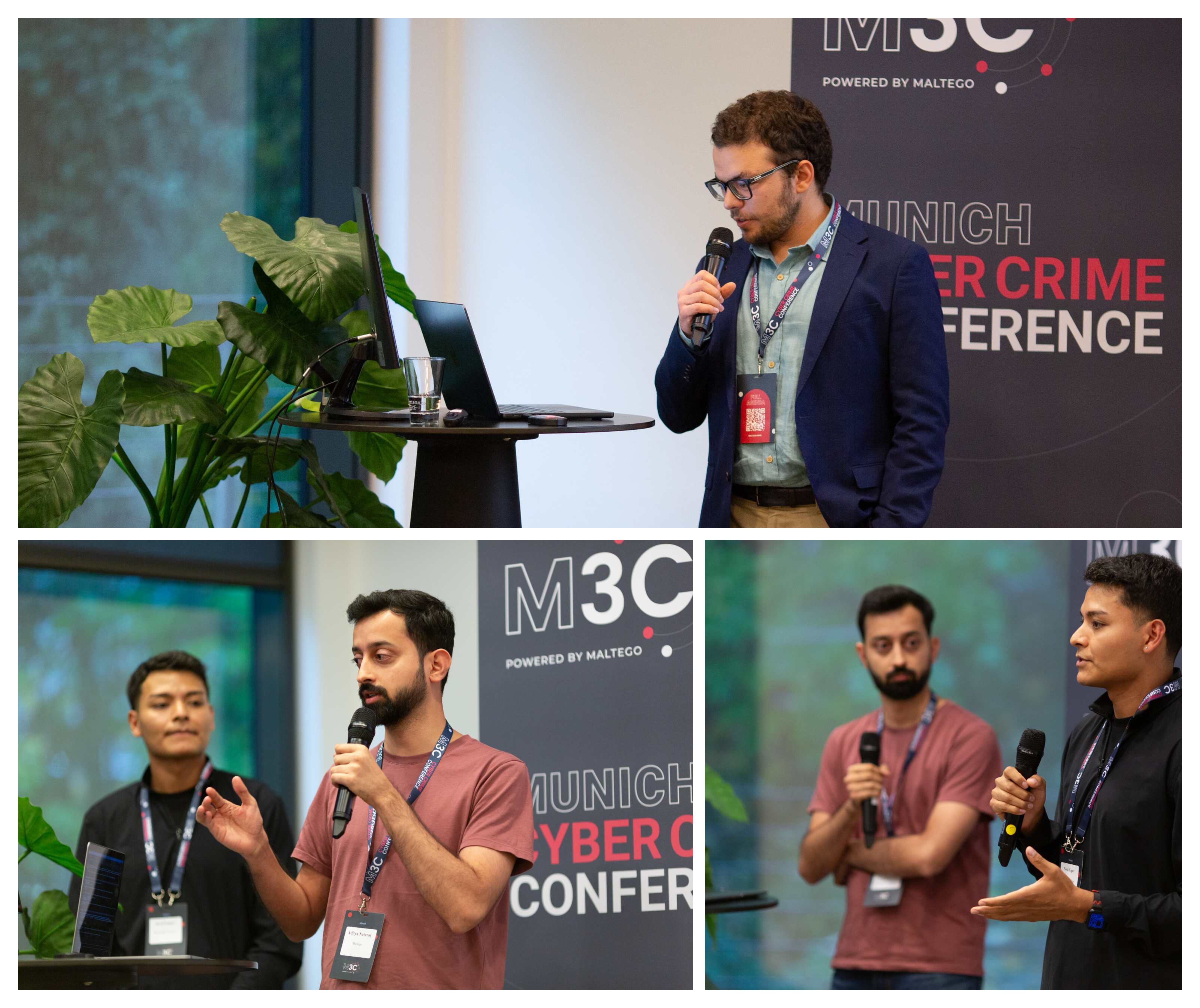
The day after the hackathon, the IntOS team took the stage at M3C, Maltego’s annual flagship conference. They demonstrated how the agent works and shared their results with more than 100 professionals from law enforcement, intelligence, the military, and defence.
The team’s next step is to test how IntOS’s reliability scores hold up in real investigations. The scores can be adjusted based on each data provider’s track record, and IntOS logs every change. The team will use those investigations to calibrate the default scores.
Maltego engineers will prepare IntOS for customer use before the team pilots it with selected customers. Their feedback will help the team refine IntOS for investigators working on high-stakes cases.
Thank you to everyone who took part in the hackathon, from the teams who brought their ideas to Munich to our partners at CDTM and the Maltego engineers who helped turn those ideas into working prototypes. It was a chance to explore what AI could contribute to OSINT workflows and to bring those ideas directly to investigators at M3C. As we develop IntOS further, we’ll keep coming back to the question that made the hackathon worth doing in the first place: how can AI help investigators make better-informed decisions about the information they find?
Interested in building on Maltego’s agentic platform? Contact your account manager to learn more about pilot access!